I have this
Jim Nutt book that I like a lot. Of course, he and the rest of the
Hairy Who are great because their drawings are amazing and they influenced
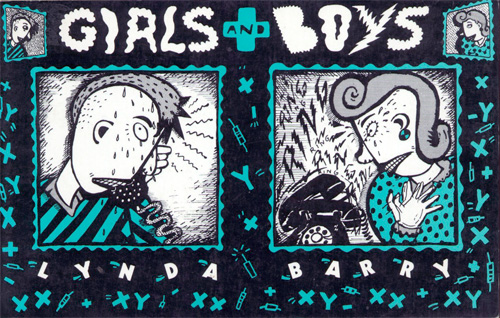
Gary Panter, Charles Burns, Lynda Barry, etc, but I think they're important, too, because they were making drawings that were an end in themselves at a time when concept was "the thing." Andrei Molotiu writes in
this blog post about music and how at some point the beauty of it became the point, much like abstract expressionism in painting. Jim Nutt and the Imagists were post-ab-ex, post-pop and merged these styles into a form that was about lush visual surfaces, but not really about irony. Nutt's later work became even more about making perfect objects, beautiful paintings on panels built into boxes that are completely composed. They're not about referring to anything outside themselves like some of my favorite comics.




7 comments:
to see original pieces by nutt, wirsum and co. is so satisfying for the "perfect object" nature. but i also can't help but be constantly freaked out by seeing some of these things in person. not for the content, but for the confidence and satisfaction of execution. i've gotten so much inspiration from reproductions in books and catalogs that to see an actual work in person is occasionally shocking/deflating/discombobulating.
seeing a gigantic poster for a wirsum show at the chicago cultural center from the street hit me harder than seeing the painting itself within it's walls. does this make sense?
this could segue nicely into a rant about paper stock, highwater books, and perhaps the seductive allure of super nintendo cartridges, if only i had the guts and need to type. oof, overby, king of the sudden and savvy.
i like stuff in print better as well
sometimes i like scanned printed matter better than the printed matter itself
feel like if i saw a chris ware in person i would feel a sort of sadness/no feeling
like it's too much value, in one sense, and valueless in another
it's crazy and scary that people actually make drawings. its also pretty cool. maybe better not to think about and just make them also. maybe not! maybe we should just think and think and then go to the bathroom and think some more. little do we know, we are making a foul drawing, beneath us, while we think, slouched on the bowl. we probably know that as well. sorry folks.
i saw a chris ware in person, at the same chicago wirsum show. but it was an actual chris ware human being. i felt excited and nervous, and did not approach him. when he heard there were free wirsum posters in the gift shop, he bolted for the door. i followed shortly thereafter and was rewarded with the same poster, the wirsum reproduction which had amazed me from the street. it proceeded to be torn at each of it's corners by the baby kitten i lived with, named after the late, great art clokey (creator of gumby). but hey, it's still rolled up in a tube at my mom's house, just like my dignity, apparently.
i also like the look of scanned knitting
though you cant dive into those stitches like in reality
and a nutt painting is nice in a book
but it stanks like an action figure in reality, i reckon
molded plastic that is, mister acrylic goldenbaum,
oh jeez folks
Inspiration > Creation > Reproduction > Interpretation > Inspiration
And so on and so forth.
I like how throughout our duel roles as artist and audience we are never fully in control. You could fight it or you could go with the flow.
I have pretty low level craft fetish, so "originals" aren't particularly valuable to me. The new Binky Brown hardcover for example is sort of a curiosity to me.
I really like the new Binky Brown book (bbbbbbbb). But I feel like I interact with it the same way I do Teratoid Heights. It's a fetish object that I want to keep perfect, not a shitty comic or paperback that I'd stick in my back pocket. It's hard to want to read it. There's some power that things like this exude, whether as finely printed books or as objects themselves. Scanned printed matter becomes this even more hardened gem, slicker and more removed from the crustiness of its being physically made. It's also this aspect of art and my experience of it that I'm confused about - there's nothing solid I can take hold of with these things, but their presence makes my environment somehow better or more magical.
I've seen Ware, Spiegelman, Clowes, and they seemed bigger than life and smaller than life at the same time. It's like when there's someone you don't know but see around town all the time, you form an idea of what they look like or who they are in your head that is completely off-base when you see them up close and talk to them. I talked to both Spiegelman and Clowes (gave 'em minis, too, wah wah), but I was tongue-tied and nervous as hell.
Man, Jesse, when you have a one-year-old and no internet available in your studio, you have to just plunge in sometimes, and you can't make amazing, long, considered posts like the ones you and everybody else on this blog does. I wish I had more time, but I was telling my wife yesterday that sometimes just throwing shit out there and seeing peoples' responses helps me clarify what I'm talking about.
There is something to the idea of "not seeing how the sausage is made", but I guess if you ever want to be a great cook you need to embrace it.
I agree with Blaise that originals somehow steal the magic away from reproductions.
I was fascinated to learn that Brinkman drew Multi-Force in all pencil and pasted each page together from 8 separate pages, but somehow it also robbed the final product of the immediacy that I had been associating it with in my own personal mythology. It was tough reconciling those two "truths".
I think with comics that the book should ultimately be more exciting than the original artwork. If the original artwork comes off as a let down then the artist did their job as a book designer. Whole being greater than the sum of it's parts and all.
Post a Comment