Showing posts with label performance. Show all posts

AGAINST AGAINST ABSTRACTION


When I write essays I often lose track of what I originally set out to say, so I'll say it right now: metaphor is essential to our practice.

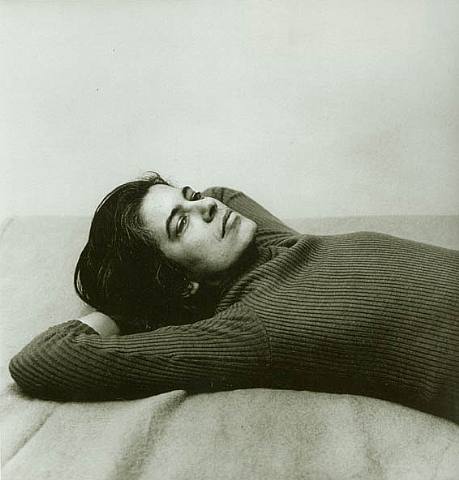
I hadn't found a clear backdrop against which to frame this argument until just this moment. Looking through scrap paper I found in a recycling bin I came across 'Against Interpretation' by Susan Sontag. I'm 9 pages into it. Sontag, like the writer Tao Lin, prefers the concrete world to the abstracted world. Some of her arguments might resonate with angry commenters on this blog:

'In a culture whose already classical dilemma is the hypertrophy of the intellect at the expense of energy and sensual capability, interpretation is the revenge of the intellect upon art.'

She goes on:

'Even more. It is the revenge of the intellect upon the world. To interpret is to impoverish, to deplete the world -- in order to set up a shadow world of "meanings". It is to turn the world into this world. ("This world"! As if there were any other.)'

I want to switch gears very quickly. A hazily remembered exchange between CF and a man in the audience:

CF: When I draw these characters, these comics, it's like I'm actually experiencing these adventures.
Man: But you're not.
CF: But I am.
Man: But you're not.

Switch to my early posts on this blog embracing and exaggerating CF's logic - the subjective over the objective - in order to a) talk about comics using natural language (working around the limitations of the words 'moving' and 'static' to describe the effect of consuming and creating comics) b) counterbalance what I felt was a bias against interpretive/subjective language.

Switch to 'Art History' and a peculiar yet obvious historical subplot: the rise of the 'art vs life' binary and the resulting advocacy of 'life' over 'art'. Patently 'artistic' gestures like 'to draw' and 'to paint' seem quaint when compared with 'to destroy' (Dada), 'to walk' (Situationism), 'to be' (Happenings, Fluxus), 'to think' (Conceptual Art), 'to relate' (Relational Aesthetics), to shop, to appropriate, etc.

Switch to the spine of a book titled 'Allan Kaprow: Art as Life'.


Susan Sontag writes, 'Interpretation, based on the highly dubious theory that a work of art is composed of items of content, violates art. It makes art into an article for use, for arrangement into a mental scheme of categories.'

Comics, like interpretation, seems to threaten the sanctity of the image:

'[Comics], based on the highly dubious theory that a work of art is composed of items of content, violates art. It makes [the image] into an article for use, for arrangement into [iconography].'

For the 'art comics' creator this description seems insensitive if not cruel - it denies the image freedom to be 'just an image', to escape context, to escape meaning. Can we be so insensitive as to reconfigure, in Susan Sontag's words, 'the pure, untranslatable, sensuous immediacy of some [...] images', into mere 'items of content'? But translation occurs across every panel border. Comics runs on translation. When images are itemized, arranged, and categorized, their purity - their one-ness of image - is not lost, but becomes hidden.

'The old style of interpretation was insistent, but respectful: it erected another meaning on top of the literal one. The modern style of interpretation excavates, and as it excavates, destroys; it digs "behind" the text, to find a sub-text which is the true one.'

The reader/viewer experiences comics 1) as physical matter (static images on concrete pages/screens) 2) as hidden matter (shifting iconography representing a single coherent universe). These two experiential states occupy two depths of field - 'inner' and 'outer' - and the reader/viewer is limited to focus on one and ambiently perceive the other. Can comics conflate these two worlds - to represent itself in an unaltered form? No. Representation is embedded within comics. A color field may represent nothing in an image (as printed matter) but upon reading (as a word in a sentence) it represents something. If a series of color fields cannot be 'read' they are not comics.

For example:

The word x does not have a fixed meaning. In the sentence, 'x was so cash', x represents [something] because x is read. In the sentence, 'x x x x x x x x x x x x x x', if you are like me, you saw a static field of x's and did not say 'x' 14 times. If 'x x x x x x x x x x x x x x' is not read (experienced linearly), the viewer does not experience a single hidden coherent universe (in which each element adds to or modifies one's interpretation of this universe).

'In some cultural contexts, interpretation is a liberating act. It is a means of revising, of transvaluing, of escaping the dead past.'

One could describe the static nature of comics, combined with the 'recording' nature of their creation, as a static recording, or a dead past. Transvaluing in comics is seeing through the marks on paper - not negating the marks - but transfering value through them, into the universe they represent.

8/10/10


As a young person I associate freedom with ephemerality, and ephemerality with institutions. I am moving on Friday and the bulk of my belongings is the product of my recent performance establishing Gaze Books. The goal of Gaze Books is more or less congruent with the goal of this blog: to create structure for like-minded individuals to create ephemeral spaces with which others can participate and/or observe.

The primary function of the institution is to offer resources within a pre-defined structure. A secondary function, or perhaps a by-product, is to confer a certain degree of belonging/anonymity upon its inhabitants. The institution is structurally resiliant enough to allow for intimate, ephemeral, and anonymous spaces to exist within it without threatening its overall structure.

Comics 'open up' ephemeral spaces. Comics are experienced within a vectorized beginning/middle/end structure - the structure of life - experienced as an ever-moving present moment. The ganzfeld of comics lies in the disconnect between participation and observation, between the acting self and the reflexive, historicizing self. Comics exist as archives - a past that performs in the present, a present moment that moves through the past.

Comics are a plural word. Comics are not a medium, I feel, because they cannot be reduced to an essential form; comics are additive, not subtractive. Comics are a nomadic practice, a way of creating/experiencing that exists inbetween mediums and practices.


I identify with a decentralized group of creators whose narratives I experience in the present, in blog feeds, emails, and face to face interactions. The history of comics exists in the present, in the decentralized, and in the nomadic. At the same time comics history exists in the archive, the institution, the stacks of books. The past is the accumulation of resources that enables the present to exist, like the relationship of the parent to the child.

PERFORMANCE IN COMICS

by

Blaise Larmee


"I invented one bad character but he’s only acting, he comes in and acts the bad parts in my stories, then he goes home and he’s nice."
-Gary Panter


Performance is perhaps the most overlooked element in comics criticism today. It is the boogie man among indie creators who seek "unmediated expression" and it is indistinguishable from nonperformance in super-mainstream comics. In fact it is difficult to say there exists a nonperformative space in comics at all, since the entire reality of comics exists only in the mind of the reader and the creator. In this case each performance could be considered a performance within a performance, but this is not so different than performance in the "real world," in which we often see ourselves as characters.


I believe in a performative reality. Let's forget for a moment the "reality" that comics are ink on paper and speak instead in the naively functionist view that comics are a space that house characters and the actors who actively portray them. In this space we can talk about performance and nonperformance and characters assume some measure of agency in the creative process, as do the actors who portray them.


So too, can the reader, for performance lies within the reader as much as any of the actors (or the creator, for that matter). When the reader is at a distance, flipping through pages, the characters look like cartoons - performing exaggerated or stylized versions of reality. The reader can impose whatever dialogue they wish upon the scenes and emotions stay thin and fluid. As the reader lingers, and as emotions coagulate, these characters start to believe their own roles and the reader takes on a role herself.


In "Lubavitch, Ukraine, 1876," Sammy Harkham takes on the twin roles of viewer and performer. It's a fantastic and admitedly cathartic performance -- both inward and outward, experienced in creation as a dance within a flexible, nuanced structure (similar to that of a dream) and experienced in retrospect as a combination of false memory and document. It exists, as all comics do, in some balance of mental and physical. I forget who said this, but it's a lovely quote: "The beauty of art is that it allows introverts to be extroverted."


There is a section of "Christina and Charles" by Austin English in which the reader is asked to participate on a sonic level - a raw and emotive layer of the story in which the viewer assumes an empowingly naive performance of a jazz ensemble. Whereas most creators focus on the diagesis and mise-en-scene, some art comics practitioners will acknowledge their actors by allowing or encouraging slip-ups, ad-libs, and roleplay. Austin English's actors are terribly inexpressive, but he shows their inexpression in extreme detail, making their reality as actors seem almost tangible. In this context the text (narrative) and images (actors) are not only separate but even oppositional, creating a oddly dynamic interplay.


CF is the most active explorer of performance in comics right now. In "Powr Mastrs" he is constantly questioning and queering the actor-character relationships one finds within. Because his characters are aware of the make-believe aspects of their performance, the actors who portray them become characters themselves and vice versa. The resulting characters are infinitely complex - seen in a hall of mirrors in which the character and actor are indistinguishable. The story begins with one of the characters, Subra Ptareo, imagining he is actually the persona he created. His idea of a nonperformative reality is quickly (and constantly) interrupted, and often serves as the butt of a joke. The reader can feel comfortable with these characters' travails, since they are only performances, but the reader also worries about the actors involved (who, of course, are themselves characters). CF seems to side with the idea that everything is performance, but then the reverse becomes true as well - nothing is performance. The ramifications of that in a comic - a completely performative experience - are transcendent.


CF and others are helping performance find its way into comics dialogues otherwise dominated by a binary of formalist (object, image, grammar) and diagetic (plot, characters) language. Performance is the space that lies in-between - a very grey space in which agency and reality are ambiguous at best. A certain degree of disbelief is required upon entry.

Coming up: Movement and Stasis

Images used: drawing by penifikko, panels from "Rock Paper Scissors" by Sam Gaskin, panel from "Luther and Johnny" by CF, panels from "Lubavitch, Ukraine, 1876" by Sammy Harkham, panel from "In the Museum" by Austin English, panel from Powr Mastrs by CF, Zine cover by Himaa published by Nieves